
Developing software has become a collaborative effort. Many development platforms are open source. Developers share libraries on GitHub. And there are huge communities for knowledge sharing, like StackExchange.
While most developers hate email, a developer newsletter can be a great way to share knowledge, be visible in the community and establish yourself as an expert.
A carefully curated newsletter full of useful tips and other content is not the type of email that people hate. Rather than being a distraction, it can be a great time-saver and help readers avoid missing any useful content.
But how do you get started?
Learn from the Best
A good way to get started is to subscribe to some well-done developer newsletters and learn by watching what their authors do.
An instructive example is Ruby Weekly, which was started back in 2010 and today is at an almost unbelievable issue #358.
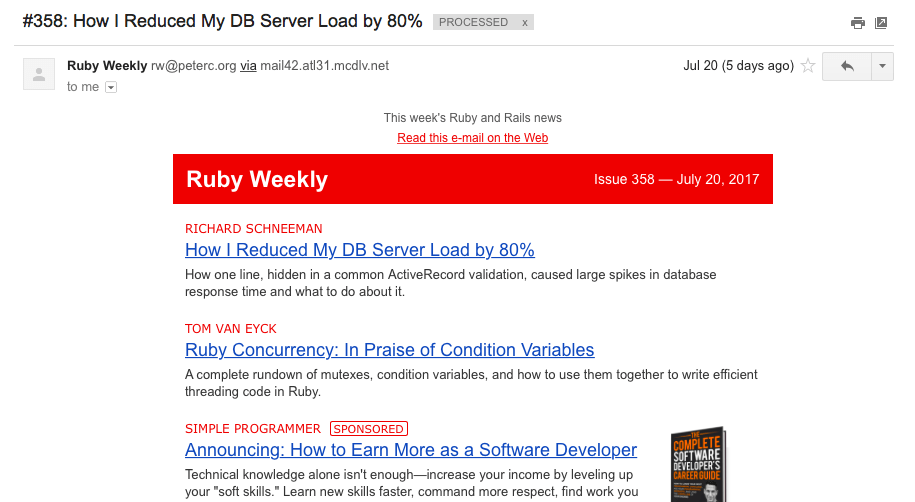
What we admire about this newsletter is its consistency. It’s sent every Thursday and has been sent on that very same day for years and years. This is a great way for readers to know what to expect and when. Its layout is simple and no frills. And the articles shared are strictly on topic every week.
A very different, but also very interesting example is Versioning by this article’s publisher, SitePoint itself.

It covers a broader array of topics, and is sent on a daily basis. It’s early morning reading to make sure you’re briefed on the best in front-end, back-end, UX and design, business and wacky tech news, to start your day.
What we like is its personality. It’s personally curated by SitePoint’s Head of Content, Adam Roberts, and spiced up with his own sarcastic humor and plenty of puns.
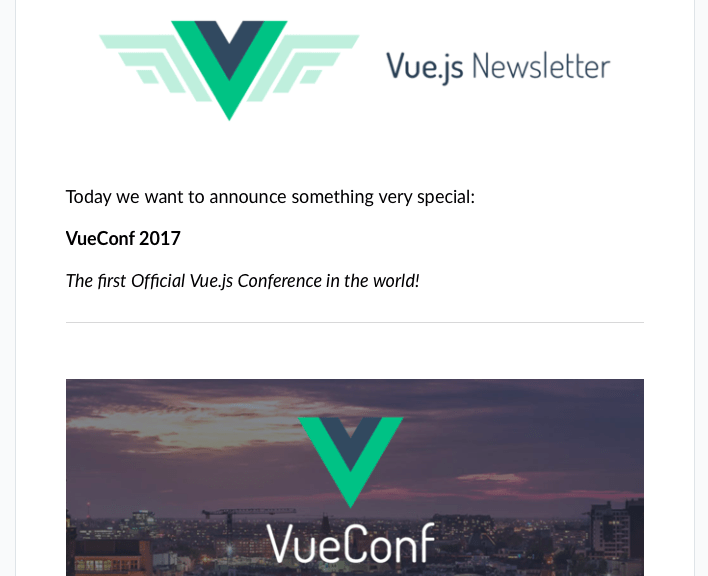
Another tech newsletter we like a lot is Vue-newsletter. We really admire the laser focus on just a single JavaScript framework.
The result of this focus is a very comprehensive newsletter. Each edition provides a good overview of everything that has happened in the Vue.js community in the previous week. It becomes essential reading and a perfect one-stop shop.
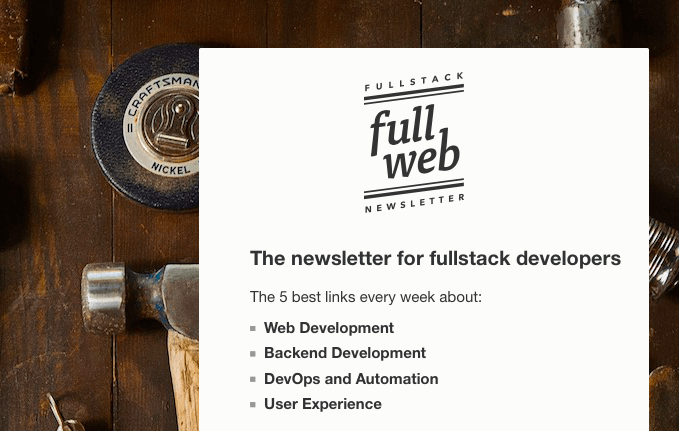
A final example is the Fullweb newsletter, a newsletter for full-stack web developers.
It, too, really has personality, but very much uses design to achieve this. And again, its format is very consistent, sharing the five best links of the week, every week.
Subscribing to a few newsletters is the perfect way to get started. It will provide you with plenty of examples of what others do, and help you figure out what works and what doesn’t.
We hope that our favorites are a good start. To find more great developer newsletters see the tech section on Revue’s newsletter directory, Discover.